Skip to content

EnergyNorthwest.com

Your Source for Energy Jobs & Industry News

Menu
  • Home
  • Energy Jobs
  • Energy Jobs In NW
  • Industry News
  • Resumes

Understanding and Mitigating Metallurgical Effects of Coal Blending and Switching

July 5, 2016
| No Comments
| Industry News

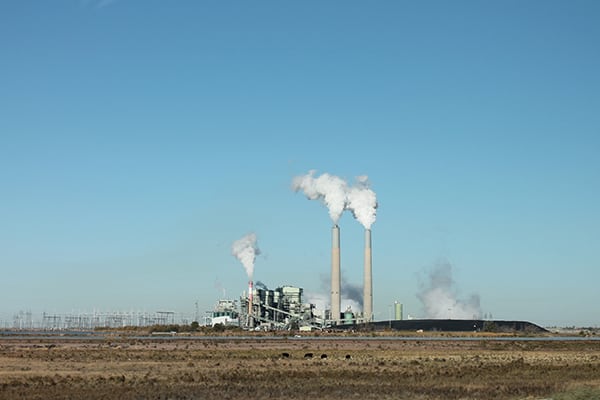
Fuel blending and switching has become the norm in response to regulatory and market forces, but many older boilers were designed for a particular fuel. Understanding the effects of different fuels on combustion system metals is crucial for ensuring smooth operations.

Is there a clear distinction between good and bad fuel to burn in a particular boiler? Apparently not! Some fuels may contain higher heating values, but they may also possess characteristics that cause emissions problems, as well as operational and reliability challenges. Other fuels may be more environmentally friendly, but may contain higher moisture content and lower heating values. Ideally, the “right fuel” is that for which a boiler is designed or retrofitted to specifically burn.

Congress extensively amended the Clean Air Act in 1990. Following those changes, the Environmental Protection Agency began imposing more stringent emissions regulations in the mid-1990s, which led to fuel blending and switching becoming the norm. Of course, there are other factors—such as cost, availability of mines, and meeting full-load requirements in a dynamic environment—that have also influenced fuel blending or switching decisions.…
Read More »

Evaluating the Use of CEMS for Accurate Heat Rate Monitoring and Reporting

July 3, 2016
| No Comments
| Industry News

cems

Power plants are familiar with using continuous emissions monitoring systems (CEMS) to monitor pollutants, but these devices also may be able to measure heat rate—which could be handy for future compliance with the Clean Power Plan.

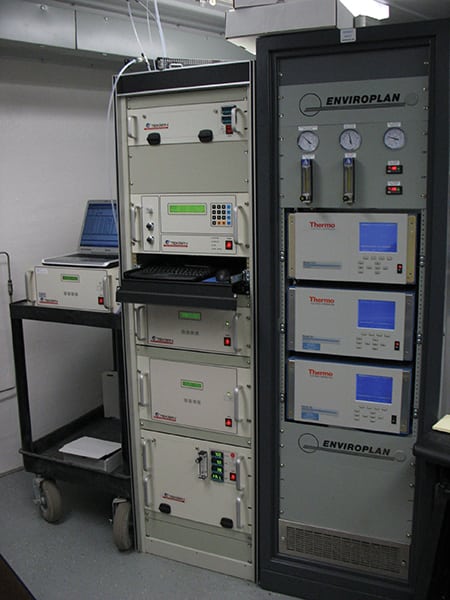
Continuous emissions monitoring systems (CEMS) are used to monitor power plant flue gas emissions as a means to comply with federal and state air emission standards. Through various methods, they determine the concentration and amount of key emissions, including nitrogen oxides, sulfur dioxide, carbon monoxide, carbon dioxide (CO2), hydrogen chloride, particulate matter, mercury, and volatile organic compounds (Figure 1).

cems

1. A continuous emissions monitoring system. Courtesy: EPRI

CEMS are required in all U.S. fossil-fired plants greater than 25 MW. They are a mature technology, and most have been widely used for more than 20 years.

The CEMS data provides an official record of the key power plant flue gas emissions. In the U.S., this data is reported to the Environmental Protection Agency (EPA).…

Read More »

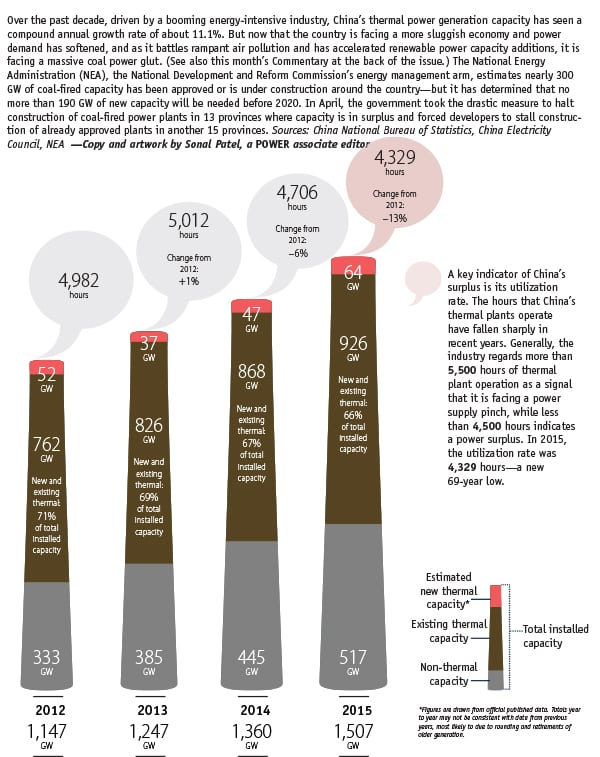
THE BIG PICTURE: China’s Power Glut

July 1, 2016
| No Comments
| Industry News

PWR_070116_GM_BP

The post THE BIG PICTURE: China’s Power Glut appeared first on POWER Magazine.

POWER Magazine…

Read More »

District Energy Systems Improve Efficiency and Reduce Carbon Emissions

June 27, 2016
| No Comments
| Industry News

Although it’s not widely publicized, a majority of the energy used to generate electricity is wasted in the form of heat discharged to the environment. For better or worse, that’s just the way a typical thermal power plant works.

Fuel, such as coal, biomass, natural gas, or uranium (in the case of nuclear plants), is used to heat water, producing high-temperature and high-pressure steam. The steam is admitted into a turbine, which spins a generator to produce electricity. However, not all of the energy stored in the steam is converted to useful work through the process.

In order for the cycle to continue, the steam exhausted from the turbine must be returned to its liquid form inside a condenser. In a fairly standard arrangement, the condenser is cooled by river, lake, or ocean water. The cooling water from the condenser is often simply released back to its source, and with it, the energy that was transferred inside the condenser.

Waste Not, Want Not

The average U.S.…

Read More »

U.S. Nuclear Power Plant Closures [Slideshow]

June 25, 2016
| No Comments
| Industry News

According to the U.S. Energy Information Administration, nuclear power has accounted for about 20% of electricity generated in the U.S. each year since 1990. In fact, the U.S. nuclear fleet out produced France—the country with the next highest nuclear generation—by more than two to one in 2012. Russia was a distant third, generating less than a quarter of the U.S. total.

But times of late have been tough for U.S. nuclear generators. Natural gas prices are at historic lows, leading to cheap gas-fueled generation. Even with climate concerns and a worldwide movement to reduce CO2 emissions, the market is not rewarding nuclear power’s zero-carbon generation. In competitive markets, nuclear power is not competitive.

Since October 2012, U.S. nuclear plant owners have closed or announced closure of 14 reactor units at 11 plant sites. Many of the units had already gone through the lengthy process of obtaining 20-year license extensions, which would have allowed them to operate until the 2030s in some cases.…

Read More »

Utility Paradigm Changing Globally in Response to Distributed Energy and Digitization

June 23, 2016
| No Comments
| Industry News

Enrico Viale, head of global thermal generation for the Italian energy company Enel, kicked off an international power industry event yesterday with a keynote presentation describing the “needs” of utilities in the future.

Enrico Viale, head of global thermal generation for the Italian energy company Enel, gave the keynote presentation at Power-Gen Europe on June 21, 2016 in Milan. Courtesy: Lee BuchsbaumEnrico Viale, head of global thermal generation for the Italian energy company Enel, gave the keynote presentation at Power-Gen Europe on June 21, 2016 in Milan. Courtesy: Lee Buchsbaum

With more than 100 power plants in 33 nations generating and distributing energy to more than 60 million customers, Enel’s multi-platform fleet is rapidly changing. “We are in the middle of a transition to a new energy paradigm characterized by the rise of renewables and distributed energy. These pose challenges to traditional generation and power network systems,” he told attendees at Power-Gen Europe in Milan, Italy, on July 21.

From Viale’s global perspective, all utilities are being influenced by four major factors: “persistent market volatility, a growing environmental culture, calls for sustainability, and the megatrend of digitalization.”…

Read More »

Posts pagination

Previous 1 … 355 356 357 358 Next

EnergyNorthwest.com 2026 . Powered by WordPress