Skip to content

EnergyNorthwest.com

Your Source for Energy Jobs & Industry News

Menu
  • Home
  • Energy Jobs
  • Energy Jobs In NW
  • Industry News
  • Resumes

Entergy Considering Sale of FitzPatrick Nuclear Plant to Exelon

July 13, 2016
| No Comments
| Industry News

Entergy Corp. announced on July 13 that it is in discussions with Exelon Corp. concerning the potential sale of the James A. FitzPatrick Nuclear Power Plant in Scriba, N.Y.

The news comes following the release of the New York Department of Public Service’s proposal to subsidize zero-emissions attributes of upstate nuclear power plants, including FitzPatrick (Figure 1).


1. James A. FitzPatrick Nuclear Power Plant.
Entergy plans to close the 838-MW single-unit facility on January 27, 2017. The company said its decision was based on “the continued deteriorating economics of the facility.” Source: Entergy Corp.

Entergy announced on November 2, 2015, that it would retire the FitzPatrick plant. Key drivers cited by the company included “significantly reduced plant revenues due to low natural gas prices, a poor market design that fails to properly compensate nuclear generators like FitzPatrick for their benefits, as well as high operational costs.”

Today, Entergy said its discussions with Exelon are consistent with its commitment to consider any viable option that would allow FitzPatrick to remain in operation.…
Read More »

EU Parliament Approves New Cybersecurity Rules

July 11, 2016
| No Comments
| Industry News

The European Union (EU) parliament on July 6 approved the first community-wide rules designed to bolster cybersecurity throughout the EU.

According to the official statement, the new law “lays down security and reporting obligations for ‘operators of essential services’ in sectors such as energy, transport, health, banking and drinking water supply. EU member states will have to identify entities in these fields using specific criteria, e.g. whether the service is critical for society and the economy and whether an incident would have significant disruptive effects on the provision of that service.”

In addition, some “digital service providers” such as search engines and online marketplaces will be required to take measures to secure their infrastructure and report significant cybersecurity incidents to national authorities.

Community-Wide Cybersecurity Action Necessary, EU Notes

“Cybersecurity incidents very often have a cross-border element and therefore concern more than one EU member state. Fragmentary cybersecurity protection makes us all vulnerable and poses a big security risk for Europe as a whole.…

Read More »

Largest Wind Turbine Contest Gets Another Entrant

July 9, 2016
| No Comments
| Industry News

Siemens on July 5 entered the competition for the largest wind turbine in the world with an upgrade of its SWT-7.0-154 model. The new SWT-8.0-154 turbine boosts power output over the earlier model through upgraded magnet technology. Other components remain largely the same over the earlier model and the smaller SWT-6.0-154 turbine, Siemens said.

The firm thus joins two others offering 8-MW wind turbines: MHI Vestas and Gamesa and Areva’s joint venture Adwen. Deciding which model is “largest” depends on how one defines the term, though. All are rated at 8 MW, but the MHI Vestas V164 has a larger rotor diameter at 164 meters (m) than the 154-m Siemens model.

Adwen’s AD-180 has the largest rotor diameter—at 180 m—of any commercially available design, but none have yet been constructed. Adwen and Danish firm LM Windpower completed the first AD-180 blade in June, each of which is just over 88 m long (Figure 1). The blades will be used for the AD-180 prototype planned to be built at a site in Germany later this year.…

Read More »

Expansion Joint Bellows Rupture Forces D.C. Cook Nuclear Plant Offline

July 7, 2016
| No Comments
| Industry News

Indiana Michigan Power—a subsidiary of American Electric Power (AEP)—reported that Unit 2 of its Donald C. Cook Nuclear Plant in Bridgman, Mich., was forced offline on July 6 due to an expansion joint bellows rupture on the unit’s moisture separator reheater.

Although no one was in the area at the time and there were no injuries, an adjacent turbine building exterior wall was damaged when the roughly 48-inch-diameter bellows burst. The component is part of the plant’s secondary steam system, providing nonradioactive steam to the low-pressure turbine.

An Unusual Event, the lowest level alert on the Nuclear Regulatory Commission’s (NRC’s) emergency response scale, was declared at 12:50 a.m. due to the unanticipated incident. The event was terminated at 2:07 a.m. The company said all appropriate notifications to local, state, and federal officials were made.

Unit 2 was shut down manually, with no impact to public health and safety. Unit 1 was not involved in the event and remains in operation at full power.…

Read More »

Understanding and Mitigating Metallurgical Effects of Coal Blending and Switching

July 5, 2016
| No Comments
| Industry News

Fuel blending and switching has become the norm in response to regulatory and market forces, but many older boilers were designed for a particular fuel. Understanding the effects of different fuels on combustion system metals is crucial for ensuring smooth operations.

Is there a clear distinction between good and bad fuel to burn in a particular boiler? Apparently not! Some fuels may contain higher heating values, but they may also possess characteristics that cause emissions problems, as well as operational and reliability challenges. Other fuels may be more environmentally friendly, but may contain higher moisture content and lower heating values. Ideally, the “right fuel” is that for which a boiler is designed or retrofitted to specifically burn.

Congress extensively amended the Clean Air Act in 1990. Following those changes, the Environmental Protection Agency began imposing more stringent emissions regulations in the mid-1990s, which led to fuel blending and switching becoming the norm. Of course, there are other factors—such as cost, availability of mines, and meeting full-load requirements in a dynamic environment—that have also influenced fuel blending or switching decisions.…

Read More »

Evaluating the Use of CEMS for Accurate Heat Rate Monitoring and Reporting

July 3, 2016
| No Comments
| Industry News

cems

Power plants are familiar with using continuous emissions monitoring systems (CEMS) to monitor pollutants, but these devices also may be able to measure heat rate—which could be handy for future compliance with the Clean Power Plan.

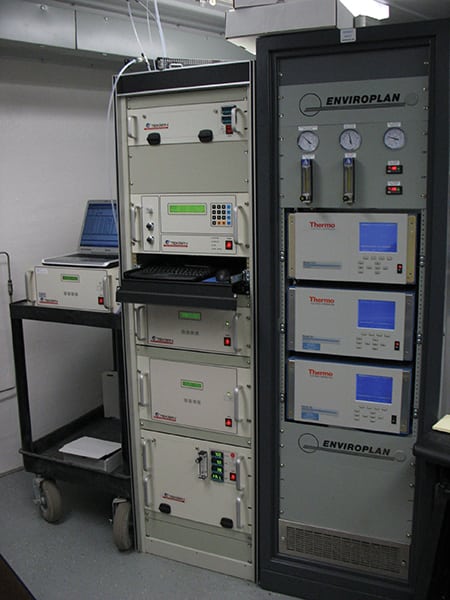
Continuous emissions monitoring systems (CEMS) are used to monitor power plant flue gas emissions as a means to comply with federal and state air emission standards. Through various methods, they determine the concentration and amount of key emissions, including nitrogen oxides, sulfur dioxide, carbon monoxide, carbon dioxide (CO2), hydrogen chloride, particulate matter, mercury, and volatile organic compounds (Figure 1).

cems

1. A continuous emissions monitoring system. Courtesy: EPRI

CEMS are required in all U.S. fossil-fired plants greater than 25 MW. They are a mature technology, and most have been widely used for more than 20 years.

The CEMS data provides an official record of the key power plant flue gas emissions. In the U.S., this data is reported to the Environmental Protection Agency (EPA).…

Read More »

Posts pagination

Previous 1 … 358 359 360 … 362 Next

EnergyNorthwest.com 2026 . Powered by WordPress