
If there’s just one piece of career advice you should follow, it should be this: spend 50% of your time polishing your resume summary.
This approach may seem unconventional, but it is what works today. When hiring managers have to wade through hundreds of applications, they inevitably take mental shortcuts. That is, read the top parts of most resumes to line up the first batch of candidates.
Not sure what to put in your summary? Let’s fix that. In this post, you’ll learn to craft the perfect resume summary for your next job application!
The Basics: What Is a Resume Summary?
A resume summary (also known as a professional summary) is a snappy paragraph that you add to your resume header, right after your contact details, to highlight your main skills, accomplishments, and other qualifications.
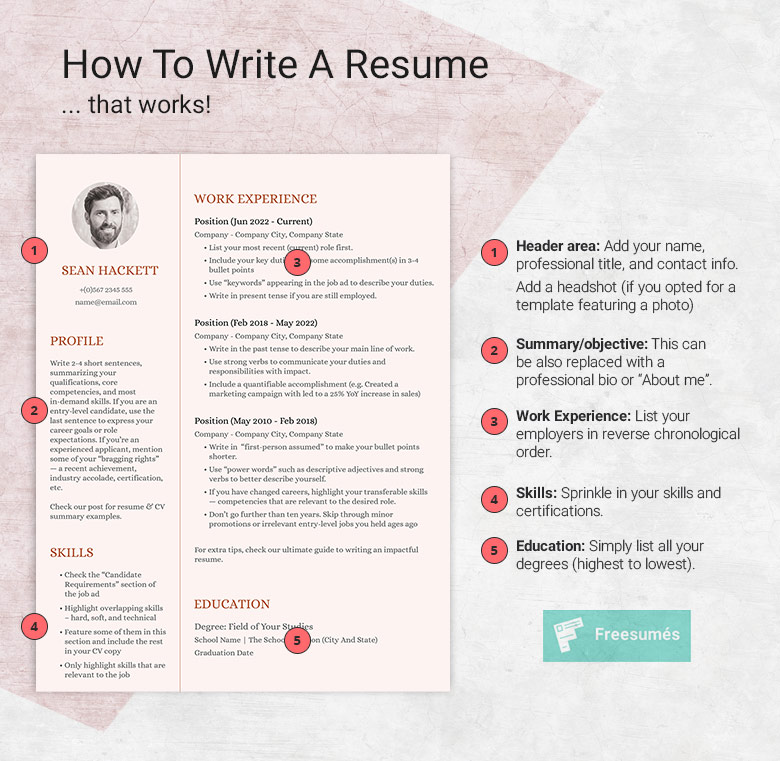
Think of your resume summary statement as a product description for a new iPhone: it’s punchy, enticing, and makes the reader intrigued to find out more.
Do You Need a Summary On a Resume?
Heck yes, a hundred times over. We’re in the employer’s market right now, and an average job post attracts about 250 resumes. So, each application only gets a quick scan from the hiring manager at the candidate pre-screening stage. A good summary for a resume can catch the readers’ attention and help you get prioritized over others.
What’s more, three-quarters of employers use applicant tracking systems (ATS) to process applications. This software automatically scans resumes to identify keywords and phrases that match the job requirements, helping employers quickly filter out less relevant candidates. When that software scores nada, it won’t forward a resume to the actual human.
Scan your resume with our ATS resume checker, it’s free!
Since your resume summary does not occupy much space, you can use it as an extra opportunity to add some relevant keywords without making your resume longer than one page.
Beyond that, a resume summary gives you a couple of extra bangin’ advantages:
- Highlights your top selling points. A summary for a resume immediately communicates your seniority level and most marketable skills.
- Clarifies your career direction. Recruiters can quickly understand who you are and what kind of role you’re targeting.
- Adds context for career changers or gaps, so you can shape your narrative if your job history isn’t perfectly linear.
- Makes your resume easier to skim by putting the most important information upfront, rather than burying it across multiple sections.
Resume Summary Examples for Multiple Jobs
Righty-o, you get that you need a summary. But what should it say, and how do you style it? Get some swipable ideas from the following resume summary examples.
Customer Service Resume Summary
Sociology major with hands-on experience as a part-time Customer Service Assistant at a fast-growing e-commerce retailer. Adept at resolving issues across multiple digital channels (live chat, email, and social media). Strong interpersonal communicator with proven ability to build strong customer rapport and diffuse conflict. Average CSAT of 95% over the last 6 months. Tech-savvy, with solid knowledge of 3PL platforms, CRM tools, and online order management systems.
Why it works
This resume summary example highlights both relevant work experience and showcases key soft skills —communication and relationship-building — that are critical in customer service roles. At the same time, it sells the candidate’s high digital literacy, another ultra-important workplace skill. Altogether, it signals that the candidate can contribute to both customer satisfaction and operational efficiency.
Administrative Assistant Resume Summary
Detail-oriented administrative assistant with 5+ years of experience supporting senior management in construction and pharma. Skilled in appointment management, meeting coordination, travel planning, and document management. Proficient in Microsoft Office Suite, Google Workspace, and project management tools (Basecamp, Asana, Bonsai). Known for strong listening skills, discretion, and high personal resilience.
Why it works:
This summary emphasizes both hard and soft skills critical for an admin role: organization, tech proficiency, and communication. It also subtly signals trustworthiness and reliability, which hiring managers value a lot. The concise phrasing makes the candidate’s value clear within seconds.
Receptionist Resume Summary
Personable and professional receptionist with four years of front desk experience at hotels (ex-Double Tree by Hilton). Skilled in managing VoIP phone systems, property management platforms, and offering VIP concierge services. Excellent verbal and written communication skills; adept at conveying brand values with each guest interaction.
Why it works:
This summary casually name-drops to emphasize the candidate’s chops. It then continues with describing her core competencies and some add-on skills (like experience with VIP guests and brand experience management) to further signal her proficiency levels. A similar professional summary for a resume would work great for other senior candidates!
Project Manager Resume Summary
Certified PMP / PMI with a decade of experience delivering complex software development projects on time and within budget ($ 15 to $ 50 mil). Skilled in Scaled Agile and Scrum methodologies, cross-functional team leadership, and stakeholder management. Known for driving project momentum, managing risk, and fostering strong collaboration between business and technical teams.
Why it works:
This resume summary uses industry-recognized certifications (Agile, Scrum, PMP) that catch both ATS systems and recruiters’ attention. It highlights the candidate’s organizational and conceptual skills, which are vital for project success. The value proposition—delivering results—is stated clearly and succinctly.
Summary for Resume With No Experience
Recent high school graduate seeking an entry-level retail position. Strong communication, teamwork, and rapport-building skills, developed through volunteer work and team sports. Quick learner with proven ability to pick up new tools (self-taught video editor!), who easily adapts to fast-paced environments. Eager to contribute a positive attitude and strong work ethic to the team.
Why it works:
This summary for a resume for freshers keeps things candid. It doesn’t oversell the candidate’s non-existent work experience. Instead, it focuses on transferable skills and personality attributes — adaptability, tech savviness, and communication. Just the kind of stuff employers value in entry-level hires. It also conveys enthusiasm and a readiness to learn, both of which help offset the lack of a job history.
Pro tip: Swap a Resume Summary for a Resume Objective
If you lack real-world experience, try going for an alternative resume format — a skills-based resume with a resume objective statement. A resume objective is a quick statement explaining why you are after a particular job.
While a resume summary highlights past accomplishments, an objective emphasizes how you hope to contribute to the field. It’s a great alternative for a header section when you don’t have much relevant experience to summarize yet. The goal? Keep it short (about 2 sentences max) and specific. Show genuine interest in the role and tie your personal strengths to what the employer needs.
Child Care Resume Summary
Caring and patient child care assistant with 5+ years of experience providing safe, nurturing environments for infants and children aged 6 months to 8 years. Skilled in activity planning, potty training, behavior management, and day-to-day family calendar management. Certified in pediatric first aid and CPR, known for fostering positive relationships with both children and their families. References available upon request.
Why it works:
This summary combines hard childcare skills (first aid, behavior management, and CPR certification) with the soft skills that parents and daycare hiring managers value most — patience, communication, and relationship-building. It also conveys trustworthiness by mentioning references.
How to Write a Resume Summary (ft More Examples!)
This may sound a bit basic, but it’s still worth stating: a resume summary should briefly summarize, not unpack a load of scattered information to the employer. This makes writing a resume summary an exercise in brevity and clarity.
In essence, you’ll need to identify your 4-6 key ‘selling points’ — your skills, expertise, or other abilities — that set you apart. Then you’ll have to further distill them into two to three sufficient statements. Here’s how to do it.
1. Re-read the Job Description
Before writing your resume summary, revisit the job description. Why? Because tailoring your summary to the role dramatically boosts your chances of catching both ATS and recruiter attention.
Start by scanning the job ad, especially the requirements and responsibilities sections, for key skills, qualifications, and action verbs. Pay close attention to repeated terms. Those often signal the most valued traits.
Next, ask yourself:
- Who is their ideal candidate?
- What problems are they hiring this person to solve?
- How do my skills and experiences match those expectations?
Jot down keywords and ideas that naturally align with your background. These will become the building blocks of a compelling, targeted resume summary that speaks directly to what the employer is looking for.
2. Make a List of Your Top Skills
Your resume summary should highlight your most valuable strengths for the role, not list every single thing you’ve ever done over your career. Save the “meat” for your work experience section.
To make a good list of talking points, think about your:
- Core technical skills or knowledge areas
- Key accomplishments (especially those with measurable impact)
- Unique strengths that set you apart from other candidates
Next, consider your certifications or recent training. Is there anything that aligns well with the open role? Finally, remember to prioritize, focus on 4-6 points that position you as an ideal candidate, not an exhaustive list of your entire career.
3. Consider Your Career Achievements
Being acknowledged by your peers for your work is impressive and is something worth sharing in your resume summary. So add some of those “bragging rights” to your master list of points.
Think broadly: this could include formal awards (e.g., Employee of the Month), industry accolades, client testimonials, or even internal leadership recognition. The point is to pick out praise that is highly relevant to your new role.
For example, if you’re applying for a sales role, highlighting recognition based on the deal volume or new business worth will strengthen your pitch.
“Experienced regional sales manager in the construction domain, specializing in B2B HVAC equipment and low voltage technology solutions. Top performer of 2025, based on the volume of closed deals and average account value. Mentor, expert negotiator, proficient in lead scoring, Salesforce, and HubSpot.”
4. Don’t Forget About Interpersonal Skills
Soft skills often make or break your fit for a role, especially in team-based or client-facing jobs. That’s why it’s smart to bring up several interpersonal traits in your resume summary.
Highlight in-demand qualities like emotional intelligence, adaptability, cross-functional collaboration, and conflict resolution. You can also briefly reference how you work with others, like “trusted liaison between teams,” “known for building strong client relationships,” or “valued team mentor.”
Change up the wording based on the position. For example, a manager’s resume summary could mention being a “clear, empathetic communicator,” while a senior executive role might benefit from “strong cross-functional collaboration skills.”
Resume Summary Example for a Supervisor:
Retail warehouse supervisor with 5+ years of experience, capable of maintaining high levels of warehouse inventory accuracy, motivating team members, and ensuring high team performance. Experienced in mediating and resolving workplace conflicts.
5. Demonstrate Your Innovative Side
Employers love candidates who think ahead and make an impact. If you’ve improved a process, launched a new initiative, or introduced a creative solution, your resume summary is a great place to mention it.
You don’t need to tell the full story — a short, punchy statement will do. For example:
- “Developed automated reporting process, cutting monthly prep time by 40%.”
- “Implemented new onboarding workflow that improved retention by 20%.”
Think about innovations that helped your team save time, boost revenue, improve customer satisfaction, or enhance efficiency. These demonstrate that you bring more than just skills — you bring ideas and initiative.
Resume Summary Example for an HR Manager
Veteran SHRM Certified HR Professional specializing in organizational design and operational process improvements. Implemented a new talent management pipeline that increased employee retention by 30% and improved corporate diversity levels by 15% within 2 years.
6. Prioritize Your List
Now that you’ve gathered your top skills, achievements, and strengths, it’s time to ruthlessly prioritize. Your resume summary shouldn’t read like a laundry list. Instead, focus on the 4–6 points that will resonate most with this specific employer.
Go back to the job description and put yourself in the recruiter’s shoes:
- What are they struggling with?
- What qualities or capabilities would help them most?
- Who would they want to call in for an interview?
Lead with your strongest selling points, especially those that match the job requirements. Place supporting details (like awards or certifications) after.
The goal is to create a summary that instantly signals “I’m the right fit” and motivates the reader to dive deeper into your resume. Clarity and relevance always win over generic statements.
Conclusion
Brevity is key when writing a resume summary. While you may be particularly proud of a work-related accomplishment or achievements you may have earned in the past, if it bears no direct relevance to the job in hand, then it doesn’t belong in your qualifications summary. Be strategic. Be selective. And always tailor your summary to the job at hand.
Need more inspiration? Check out our full collection of resume examples to see more great-performing summaries in action.
The post Resume Summary: Examples and How-To Tips appeared first on Freesumes.com.