Skip to content

EnergyNorthwest.com

Your Source for Energy Jobs & Industry News

Menu
  • Home
  • Energy Jobs
  • Energy Jobs In NW
  • Industry News
  • Resumes

Tag: power

Watts Bar Unit 2 Nuclear Plant Completes Power Ascension Testing

October 4, 2016
| No Comments
| Industry News

The Tennessee Valley Authority (TVA) has reached another milestone in its effort to bring Watts Bar Unit 2 into commercial operation: The unit completed its final power ascension test—a 50% load rejection from full power—and safely returned to full power on September 30.

The testing had been halted on August 30 due to a switchyard transformer fire. Although the fire did not affect Unit 2’s systems, which responded to the event as designed, the affected transformer had to be replaced before testing could resume. The TVA said a rigorous and detailed inspection, repair, and testing process was performed before the transformer was returned to service on September 26.

Power ascension testing included more than 40 required tests at various power levels up to 100% output, with pauses at 30%, 50%, and 75% (Figure 1). The gradual increase in power provided data, which was used to verify that the unit was operating as designed.


1. Watts Bar Unit 2 power ascension testing plan.
…

Read More »

SLIDESHOW: An Alarming Trend Affecting U.S. Baseload Power

September 18, 2016
| No Comments
| Industry News

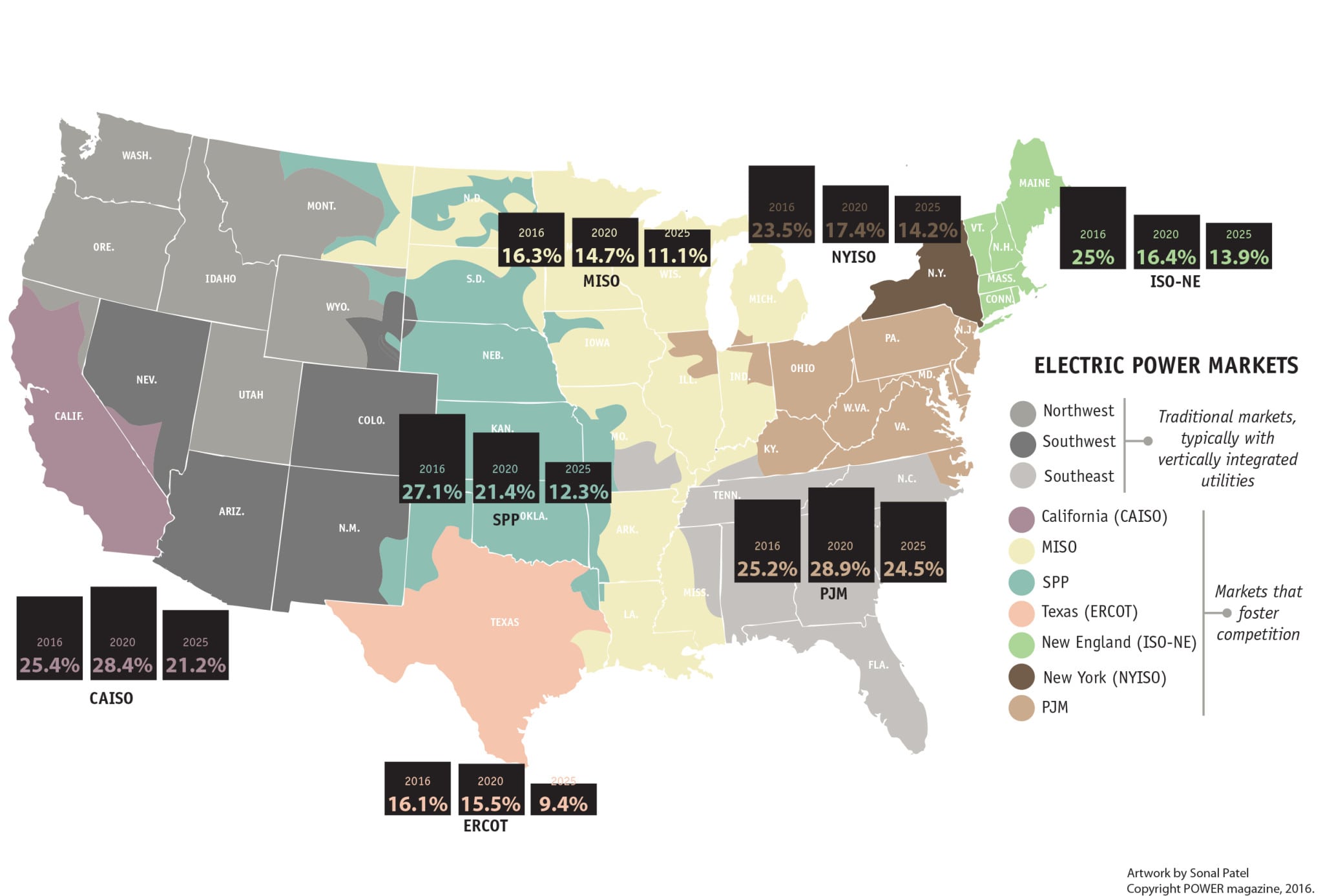
States, regulators, and market participants have in recent years called attention to a trend concerning uneconomic baseload generation in organized wholesale markets, specifically in ISO New England, New York Independent System Operator (NYISO), MISO, PJM, the Electric Reliability Council of Texas (ERCOT), and the California Independent System Operator (CAISO).

Cheap natural gas, low power demand growth, increasing operating costs owing to state and federal rules, and market design issues are affecting bottom lines and forcing some power companies to withdraw generating capacity or reconsider participation in these competitive markets.

 ” data-cycle-speed=”750″ data-cycle-center-horz=”true” data-cycle-caption=”#gslideshow_captions” data-cycle-caption-template=”{{alt}}”

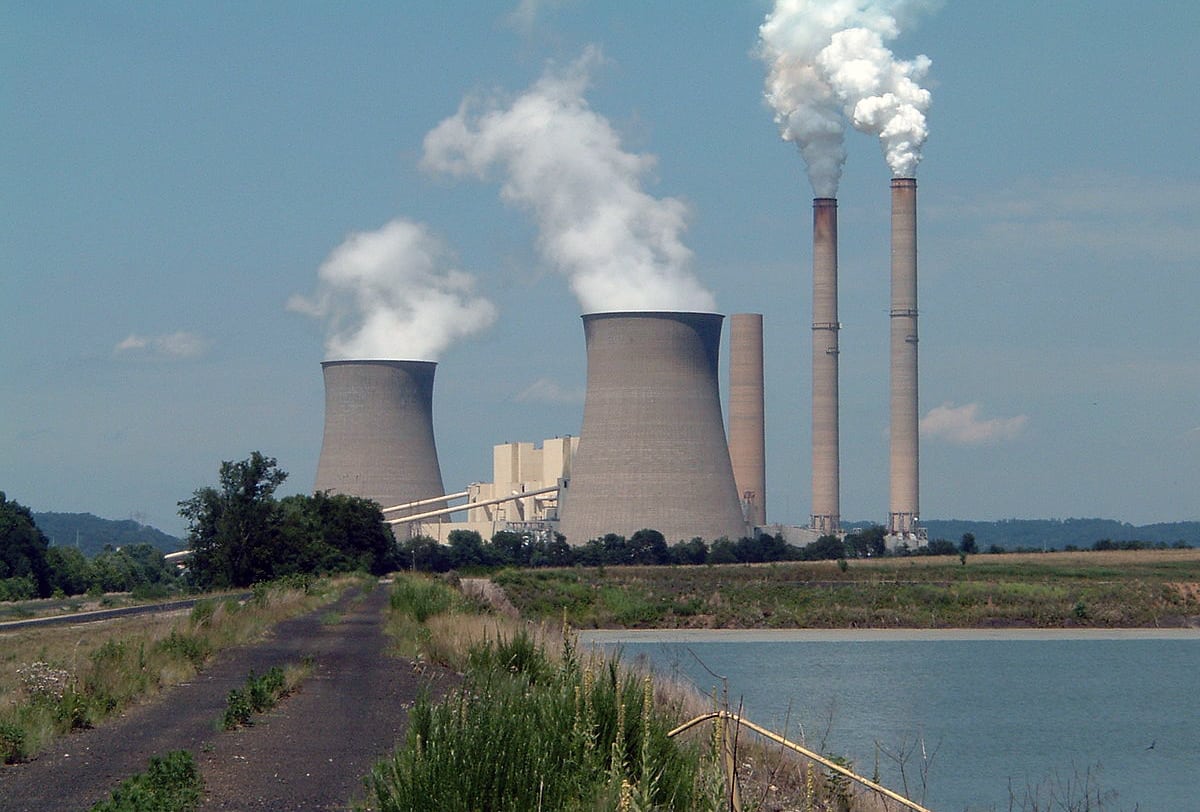
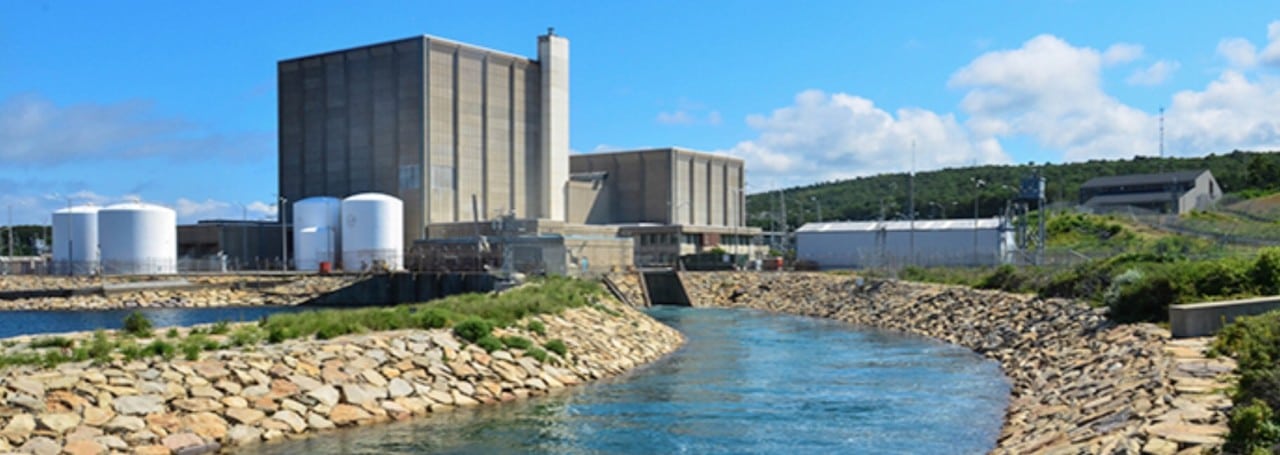
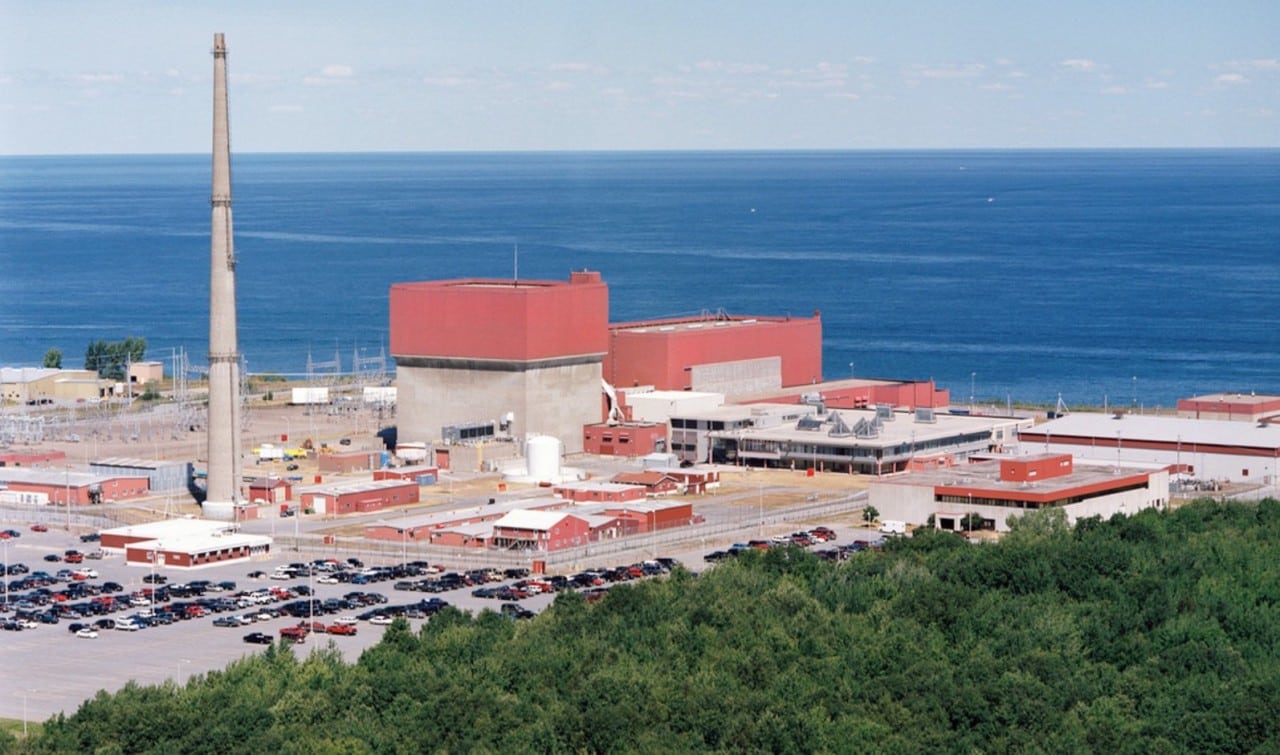
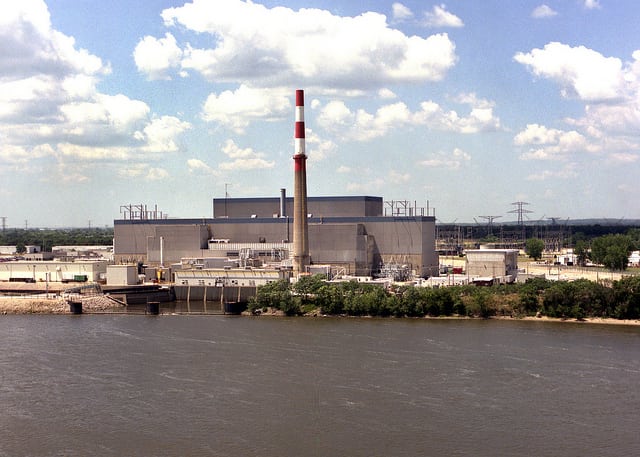
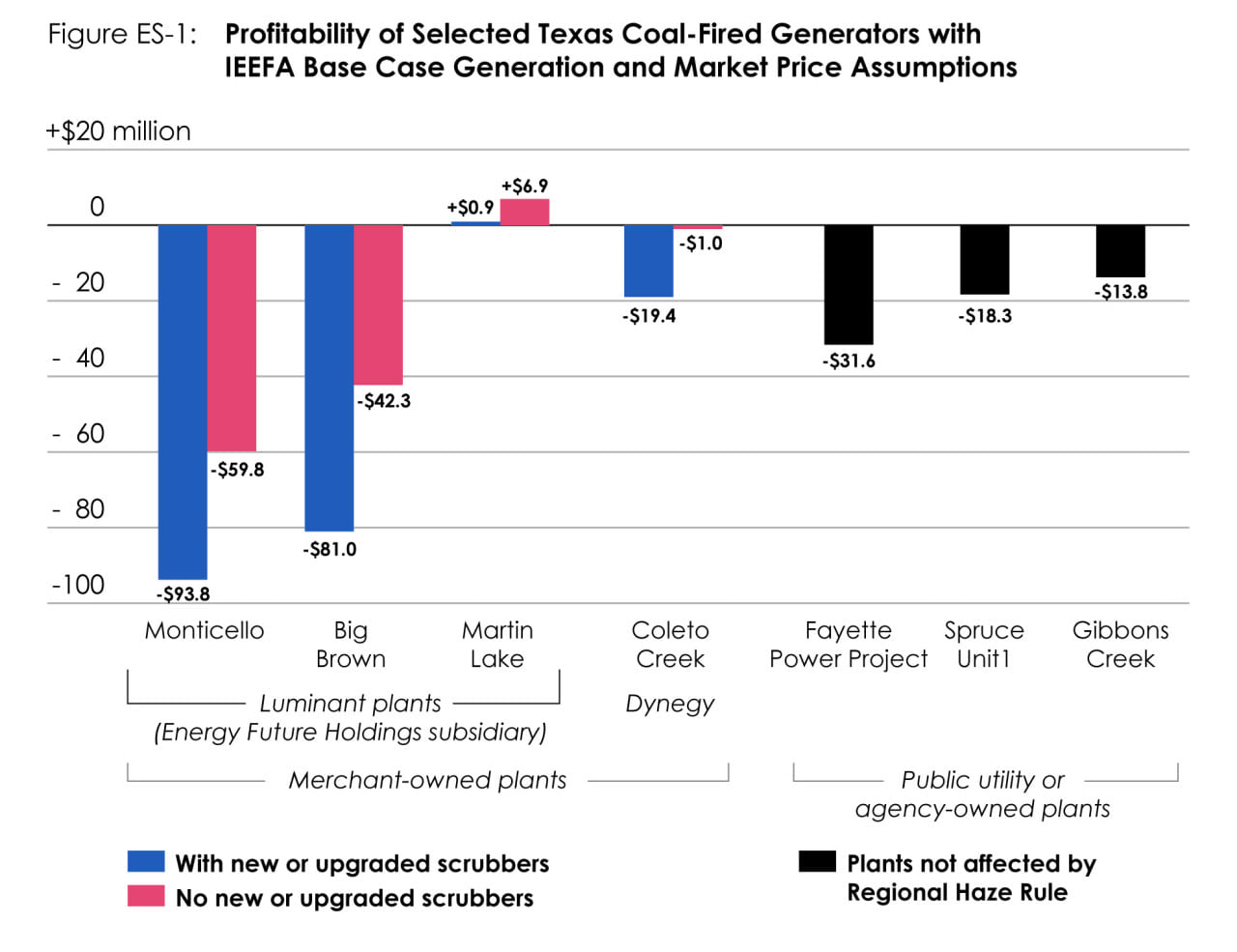
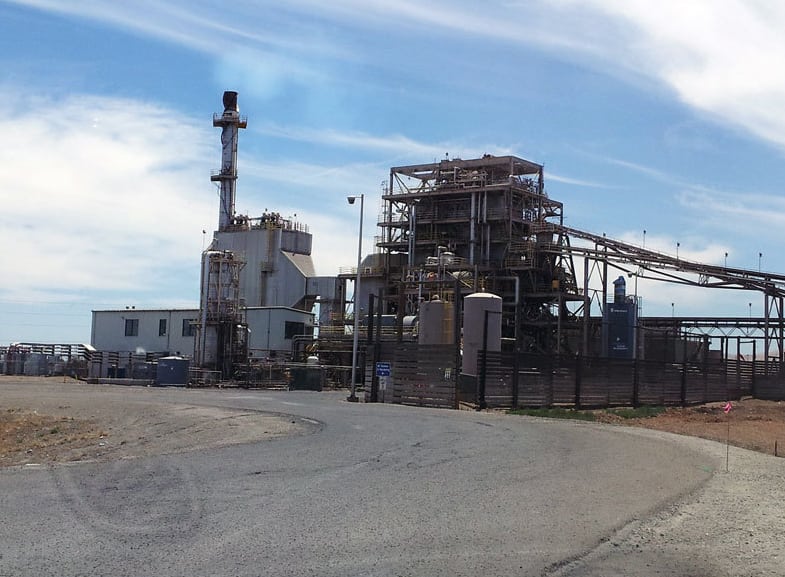
<strong>1.       An alarming trend. </strong><br> <br> This baseload exodus could have a worrying impact on reliability, as shown by summer planning reserve margin projections (%) from the North American Reliability Commission's <em>2015 Long-Term Reliability Assessment. Source: POWER </em>  <strong>2.     Goodbye, Ohio. </strong>  <br> <br>On Sept. 14, American Electric Power (AEP) agreed to sell four Midwestern power plants—a total 5.2 GW for about $  2.17 billion—in an effort to become a fully regulated company. The plants include the 1,186-MW natural gas–fired Lawrenceburg Generating Station in Lawrenceburg, Indiana; the 840-MW natural gas–fired Waterford Energy Center in Waterford, Ohio; the 507-MW natural gas–fired Darby Generating Station in Mount Sterling, Ohio; and the 2,665-MW coal-fired Gen. James M. Gavin Plant in Cheshire, Ohio.  <br> <br> Duke Energy in 2014 made a similar move when it announced it would transition its generating fleet away from volatile organized wholesale markets. <br> <br> Pictured:  AEP's 2,665-MW coal-fired Gen. James M. Gavin Plant in Cheshire, Ohio, is one of the largest in the U.S. <em>Courtesy: Analogue Kid/Wikimedia Commons </em> <strong>3.     ISO New England. </strong> <br> <br>Entergy Nuclear closed the 620-MW Vermont Yankee nuclear plant in December 2014, owing to increased costs and market conditions, even though the unit had received a license renewal to operate until 2032. In October, Entergy said it will also retire its 680-MW Pilgrim nuclear plant in Massachusetts by 2019, citing low wholesale power prices and low gas prices.  <br> <br> Pictured: Entergy's Pilgrim nuclear plant. <em>Courtesy: Entergy</em> <strong>4.      NYISO. </strong><br> <br>On August 1, New York’s financially struggling upstate nuclear power plants—Exelon's 610-MW Ginna and 1,761-MW Nine Mile plants, and Entergy's 838-MW FitzPatrick plant (which Exelon agreed to acquire for just $  110 million)—received a much-needed lifeline with passage of the New York State Public Service Commission's Clean Energy Standard. The Clean Energy Standard requires all six New York investor-owned utilities and other energy suppliers to pay for the intrinsic value of carbon-free emissions from nuclear power plants by purchasing “Zero-Emission Credits.” The plants will begin receiving subsidies in 2017.  <br> <br> Pictured: Entergy's James A. FitzPatrick Nuclear Power Plant, a single-unit facility located in Scriba, N.Y., that the company planned to shut down by January 2017 for economic reasons, but which Exelon will buy and likely keep open. <em>Courtesy: Exelon </em>  <strong>5. 	PJM. </strong><br> <br>AEP Ohio and FirstEnergy are continuing discussions with Ohio legislators around restructuring the state's electricity market.  <br> <br> In late June, meanwhile, Exelon notified state and federal regulators that it plans to close the two-unit, 1,880-MW Quad Cities in Cordova, Ill., by June 2018. The company warned that its Three Mile Island plant, which didn't clear in the PJM capacity auction for the 2019 to 2020 planning year, might be at risk of closure. It said it would also close the 1,098-MW Clinton, Ill., single-unit reactor in June 2017, even though it cleared the MISO capacity auction. According to Exelon, Quad Cities and Clinton have lost a combined $  800 million over the past seven years, “despite being two of Exelon’s best-performing plants.”  <br> <br> Pictured: Exelon's 1,871-MW Quad Cities station <em>Courtesy: Exelon </em>  <strong>6. 	MISO. </strong><br> <br>Dynegy in May said it will shut down three coal units at two Illinois power plants—more than 1,800 MW—because they failed to recover basic operating costs at a MISO capacity auction. Just months before, the company said it would retire another 465-MW uneconomical Illinois coal plant.  <br> <br> Meanwhile, Detroit-headquartered DTE Energy in June said it would retire eight small coal-fired units at three sites in Michigan within the next seven years due to "age and projected future costs." <br> <br> Pending closure of Exelon's 1,069-MW Clinton nuclear plant for economic reasons, meanwhile, complicates MISO's planning efforts. The grid operator projects a generation shortfall of 300 MW, 800 MW, and 1.2 GW in parts of Michigan, Missouri, and Illinois, respectively.  <br> <br>Pictured: DTE Energy in June 2016 said that it will retire the last unit at its Trenton Channel Power Plant in Detroit by 2023, along with seven other units in its fleet. <em>Courtesy: DTE Energy </em>  <strong>7.     ERCOT.</strong> <br> <br>A September 2016 report from the Institute for Energy Economics and Financial Analysis (IEEFA) projects that seven aging coal-fired power plants in Texas—a total 8.1 GW that represents about 40% of coal-fired capacity in ERCOT—will likely be retired due to their inability to compete in the Texas electricity market. Among "forces arrayed against coal-fired generation" that suggests the plants' retirement is likely are increases in natural gas generation, increased competition from new wind and solar resources, and generally, "low energy market prices in ERCOT's deregulated wholesale markets,” IEEFA said. Another consideration is a federal regional haze rule that could force generators to install $  2 billion in pollution controls, rendering them uneconomical.  <br> <br> But coal plants aren't the only ones in trouble. NRG Energy mothballed all units at its Bertron Natural Gas Plant and Unit 5 at its Greens Bayou natural gas plant (at total 1,098 MW) this summer. The 45-MW Aspen Lufkin biomass plant was also mothballed this summer for economic reasons.  <strong>8.     CAISO. </strong><br> <br>In California, where generation from hydropower and renewables soared this summer, thermal generation (almost all from natural gas) in CAISO dropped 20% compared to last summer, according to the Energy Information Administration. The biomass sector has suffered the most notably. According to the California Biomass Energy Alliance, more than a dozen of its members’ 34 operating solid-fuel biomass plants have been idled, struggling to compete with low natural gas prices.  <br> <br> Under a recently passed bill (SB 859), however, electricity retailers will be required to enter into five-year contracts for 125 MW of biomass power from facilities built before 2013 that generate energy from wood harvested from high-fire hazard zones, reported <em>Biomass </em> magazine in September.  <br> <br> Pictured: Thermal Energy Development Partnership, a 20.5-MW woody biomass power plant in Tracy, in San Joaquin County, Calif., has been idled. <em>Courtesy: Greenleaf Power</em>

<
>
7. ERCOT.

A September 2016 report from the Institute for Energy Economics and Financial Analysis (IEEFA) projects that seven aging coal-fired power plants in Texas—a total 8.1 GW that represents about 40% of coal-fired capacity in ERCOT—will likely be retired due to their inability to compete in the Texas electricity market. Among “forces arrayed against coal-fired generation” that suggests the plants’ retirement is likely are increases in natural gas generation, increased competition from new wind and solar resources, and generally, “low energy market prices in ERCOT’s deregulated wholesale markets,” IEEFA said.

…

Read More »

Western Region Power Grid: Coming Soon?

September 12, 2016
| No Comments
| Industry News

Panelists debating the pros and cons of a regionalized western power grid seemed to agree that the development of such a system is inevitable, but they disagreed on how fast the evolution should occur.

The panel discussion took place during the California Independent System Operator (ISO) Stakeholder Symposium held on September 7 in Sacramento. At one point, the moderator of the session, John Danner, senior fellow at the University of California, Berkley, Hass School of Business, suggested that the dialogue had progressed beyond the question of whether or why a regional approach might be beneficial, to a debate about how and when it should be implemented (Figure 1).


1. Western collaboration.
Participating in the panel discussion exploring a western grid were (from left to right) John Danner, Anne George, Jan Smutny-Jones, Marc Joseph, and Rob Lapsley. Source: California ISO

“It’s certainly true that the physics suggest operating a bigger grid is better,” said Marc Joseph, attorney with Adams, Broadwell, Joseph, and Cardozo, “but .…

Read More »

Lloyd’s Register on Current Nuclear Power Challenges

September 6, 2016
| No Comments
| Industry News

POWER Editor Gail Reitenbach interviewed King Lee of Lloyd’s Register on June 29 at the World Nuclear Exhibition in Le Bourget, France. The firm is a “non-profit distributing charity with a public benefit mandate,” which means that it is independent from shareholders, and profits are distributed to a variety of educational and other charities. Its nuclear group has provided independent, expert technical advice on safety and risk management for more than 60 years, beginning with the UK’s Calder Hall reactors in the 1950s. The UK vote to exit the European Union (EU), known as “Brexit,” had taken place the previous week. Questions and answers have been edited for length and style.

GR: What effect do you think Brexit, if it actually goes through, will have on UK nuclear plans and the European power sector generally?

KL: I think it’s too early to say whether Brexit will happen, and if it does happen, what form it will take, because the details will have to be worked out between the UK and EU countries.…

Read More »

DOE Invests $28M in Research Projects to Enable Near-Zero-Emitting Fossil Fuel–Based Power Generation

August 27, 2016
| No Comments
| Industry News

Fourteen research and development projects to scale up coal-based advanced combustion power systems and gasification processes and improve costs and endurance of solid oxide fuel cells (SOFCs) have won investments of more than $ 28 million from the Department of Energy (DOE).

The Energy Department on August 24 announced it has selected the projects to help “enable cost-competitive, fossil fuel–based power generation with near-zero emissions.”

Projects to Support 10-MW Pilots with Near-Zero Emissions

Three of the 14 projects were selected to complete preliminary designs of 10-MW pilot plants based on advanced combustion systems. The DOE invested $ 3.2 million in pre-project planning for a General Electric (GE) chemical looping combustion pilot plant. It also invested $ 3.3 million for pre-project planning for a flameless pressurized oxycombustion pilot plant spearheaded by San Antonio–based Southwest Research Institute, ITEA, Jacobs, the Electric Power Research Institute, General Electric Global Research, and Peter Reineck. Another $ 3.3 million went to Babcock & Wilcox and  The Ohio State University for a front-end engineering and design study for their coal-direct chemical looping pilot plant

Each of the 10-MW pilots will be capable of capturing 90% of carbon dioxide emissions and will contain design features that will be assessed prior to commercial-scale demonstration, the DOE said.…

Read More »

Explosion at Chinese Coal Power Plant Reportedly Kills 21

August 15, 2016
| No Comments
| Industry News

News agencies are reporting that an explosion at a coal-fired power plant in Dangyang, a city in central China, has killed at least 21 people and injured five others, three seriously.

The event is said to have occurred around 3:20 p.m. local time on August 11. The facility—designed to generate thermal power and sell slag, ash, and petroleum products—is owned by Madian Gangue Power Generation Co. Some sources suggested that the plant is in the process of being commissioned and was undergoing testing at the time of the incident.

🔴Steam pipe explosion at central #Hubei , #China power station kills 21, injures 5
📸 pic.twitter.com/syqbBlhKCa

— Mete Sohtaoğlu (@metesohtaoglu) August 11, 2016

It has been difficult to establish specifics about the blast. An investigation is said to still be in progress. Initial reports identified the plant as a chemical facility, but it was later determined to be the coal power plant site. Although several sources have suggested that the event was triggered when “a high-pressure steam pipe exploded,” the number of casualties, ensuing fire, and volume of black smoke shown in pictures posted on Twitter that are said to be of the event, suggest that something much more explosive initiated the incident.…

Read More »

Posts pagination

Previous 1 … 47 48 49 50 Next

EnergyNorthwest.com 2026 . Powered by WordPress